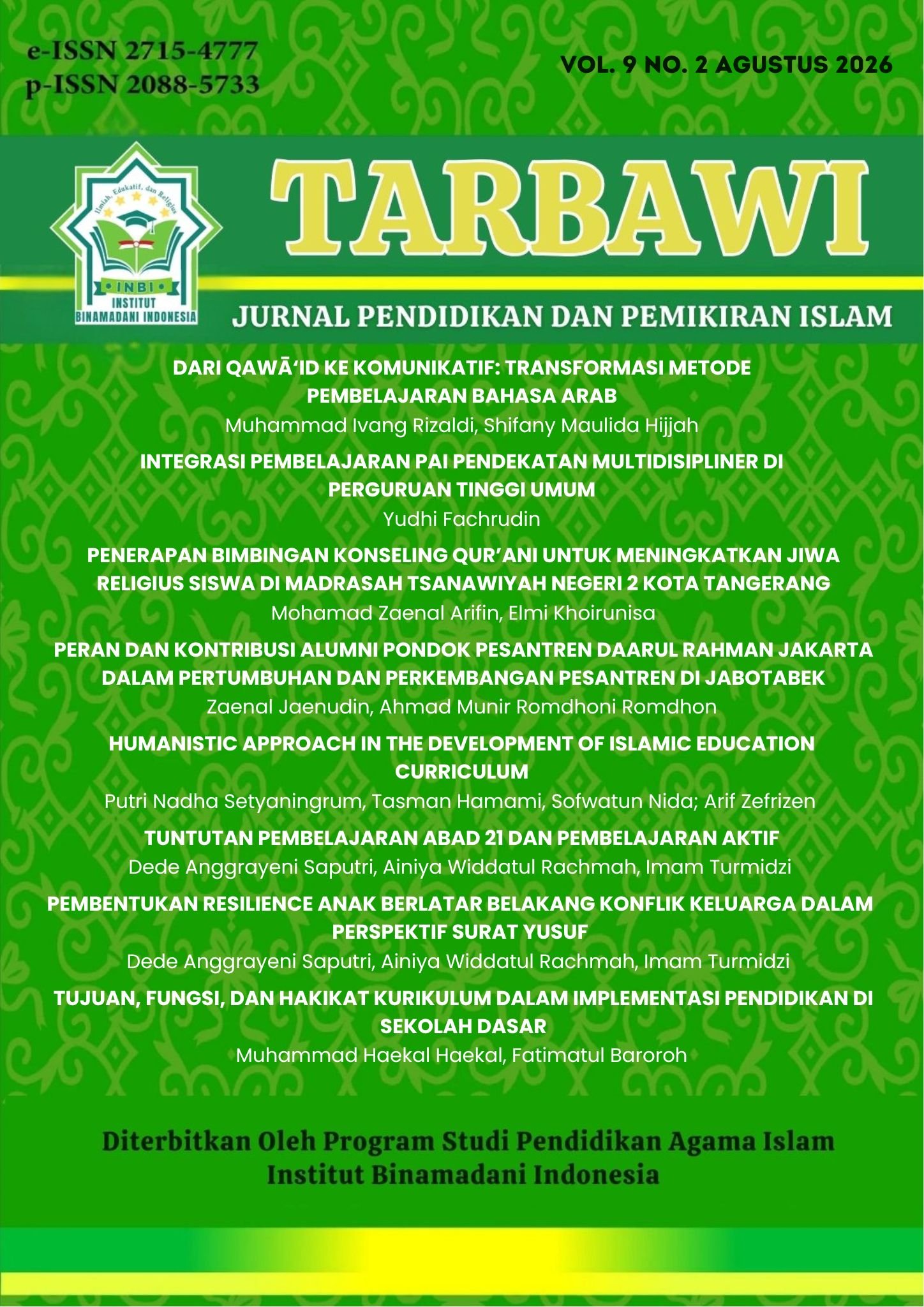
PEMBENTUKAN RESILIENCE ANAK BERLATAR BELAKANG KONFLIK KELUARGA DALAM PERSPEKTIF SURAT YUSUF
DOI:
https://doi.org/10.51476/k6qzyb07Keywords:
Resilience, Family Conflict, Surah YusufAbstract
This study aims to explore the story of the Prophet Yusuf (as), which suggests the formation of the ability to survive and recover from family conflict. This study uses a qualitative library research method. The primary data used are the Qur'an and tafsir books, while secondary data are obtained from books, scientific journals, and other relevant literature. Data collection techniques are carried out through the process of sorting, selecting, and summarizing data according to the discussion. Data analysis techniques are carried out by data reduction, data display, data verification, and drawing conclusions. This study found that the story of the Prophet Yusuf (as) contains fragmented stories that describe family conflict, starting from the story of the Prophet Yusuf's dream to his father, to the occurrence of various tragic events experienced by the Prophet Yusuf (as), such as being thrown into the bottom of a well, being found by travelers and sold into slavery, being accused of sexual harassment, as well as mental intimidation and threats of imprisonment. This study concludes that the Prophet Yusuf (as) was able to survive and overcome life's problems because of the resilience interventions given to him, in the form of; awakening self-strength (faith in Allah SWT, self-confidence, and optimism), providing support from others, teaching self-regulation, and strengthening self-efficacy. This research is limited by its descriptive analysis of limited data. Therefore, further studies with more extensive data coverage, particularly field data, are expected.
References
Abd al-Hayy al-Farmawi. (1977). Al-Bidâyah Fî Tafsîr Al-Maudhû’i. Mesir: Maktabah Jumhuriyyah Mishr.
Ah. Yusuf. (2017). Kebutuhan Spiritual; Konsep Dan Aplikasi Dalam Asuhan Keperawatan. Jakarta: Wacana Media.
Al-Marâgî, Ahmad Musthafâ. (2017). Tafsîr Al-Marâgî. Juz 30. Kairo: Musthafa Babi al Halabî.
Amalia, Neneng, Mohamad Zaenal Arifin, Umar Samsudin, and Abdul Ghofur. (2025). “Islamic Education Teacher’s Strategy in Building Resilience in Students with Broken Home Family Backgrounds.” Al-Hayat: Journal of Islamic Education, 9(1), 106–23. https://doi.org/10.35723/ajie.v9i1.101.
Arifin, Mohamad Zaenal. (2022). “Penyembuhan Masalah Spiritual Pasien Di Rumah Sakit Melalui Pendekatan Komunikasi Spiritual Terapeutik Berbasis Al-Qur’an.” AL QUDS : Jurnal Studi Alquran dan Hadis, 6(2), 925. https://doi.org/ 10.29240/ alquds.v6i2.4248.
Defaza, Agla, and Wulansari Vitaloka. (2025). “Rahasia Keberhasilan Sosial Emosional Anak: Keluarga Sebagai Faktor Kunci.” Generasi Emas 8(1), 111–23. https://doi.org/10.25299/ge.2025.vol8(1).21209.
Fajariyah, Lukman. (2021). “Interpretasi Ayat-Ayat Resiliensi Dan Signifikasinya Dalam Kehidupan Sosial.” International Conference on Islamic Studies 5, 273–86. https://doi.org/https://doi.org/10.19105/iconis.v5i1.83.
Farzana Parveen, Prof Shahina Maqbool, and Dr. Shah Mohd Khan. (2016). “Optimism as Predictor of Psychological Well Being among Adolescents.” International Journal of Indian Psychology 3(4), 12-21. https://doi.org/10.25215/0304.154.
Fauziah. (2022). “Effects of Family Conflicts on Children’s Personalities.” International Journal Education and Computer Studies (IJECS) 2(2), 61–68. https://doi.org/ 10.35870/ijecs.v2i2.793.
Febrinabila, Rizki, and Ratih Listiyandini. (2016). “Hubungan Self Compassion Dengan Resiliensi.” Prosiding Konferensi Nasional Peneliti Muda Psikologi Indonesia 1(1), 19–28.
Hamka. Tafsir Al Azhar. (2013). Juz 30. Jakarta: Pustaka Panjimas.
Hanifah, Razita, and Nur Aini Farida. (2023). “Peran Keluarga Dalam Mengoptimalkan Perkembangan Anak.” Az-Zakiy: Journal of Islamic Studies 1(01), 23–33. https://doi.org/10.35706/azzakiy.v1i01.9951.
Hasanah, Uswatun, and Siti Istiqomah. (2024). “Peran Orang Tua Dalam Mengatasi Sibling Rivalry Terhadap Perkembangan Sosial Emosional Anak Usia Dini.” Tinta Emas: Jurnal Pendidikan Islam Anak Usia Dini 3(2), 157–74. https://doi.org/ 10.35878/tintaemas.v3i2.1389.
Hasmarlin, Hanum, and Hirmaningsih Hirmaningsih. (2019). “Self-Compassion Dan Regulasi Emosi Pada Remaja.” Jurnal Psikologi 15(2), 148. https://doi.org/ 10.24014/jp.v15i2.7740.
M. Quraish Shihab. (2020). Sejarah Dan Ulum Al-Qur’an,. Jakarta: Pustaka Firdaus.
Marleni, L., Astuti, L., MArdinah, Saputra, A., Suswitha, D., Hulisya, S., dan Hayun, Z. (2024). “Hubungan Self Efficacy Dan Perilaku Bullying Pada Anak Usia Sekolah Di Palembang Tahun 2023.” Journal GEEJ 7(2), 172–77. https://doi.org/10.32831/jik.v12i2.626
Mughni, Syafiq, and Muhammad Marzuk. (2022). “TAFSIR AYAT PSIKOLOGI, Memaknai Ayat Al-Qur’an Tentang Resiliensi Jiwa Dan Urgensinya Dalam Kehidupan Sosial.” Al-Afkar, Journal For Islamic Studies 5(4), 101–14. https://doi.org/ 10.31943/afkarjournal.v5i4.319.
Nabilah, Bella Rifqi, Fatwa Tentama, and Herlina Siwi Widiana. (2022). “Employability Predictor Factors : Resilience, Self-Esteem, and Self-Confidence.” Psikostudia : Jurnal Psikologi 11(2), 240. https://doi.org/10.30872/psikostudia.v11i2. 7357.
Nisa, Afdilla. (2024). “Ajaran Resiliensi Dalam Kisah Al-Qur’an Dan Urgensinya Bagi Single Mother Era Modern: Kajian Tematik QS Al-Qashash [28]: 7-13.” Islamika: Jurnal Ilmu-Ilmu Keislaman 24(1), 85–102.
Nurkafidz, Nizam Fahmi. (2025). “Pengaruh Konflik Rumah Tangga Terhadap Kesehatan Mental Anak Dalam Perspektif Hukum Keluarga Islam.” Jurnal Pengabdian Masyarakat Dan Riset Pendidikan 3(4), 4384–91. https://doi.org/ 10.31004/jerkin. v3i4.1051.
Pratama, Aunillah Reza, and Wildan Hidayat. (2018). “Fenomena Bullying Perspektif Hadits.” Dialogia Jurnal Studi Islam dan Sosial, 16(2), 177–78. https://doi.org/10.21154/dialogia.v16i2.1502.
Ramadhani, Latifa Nur, Rofico Eka Wardani, Bayu Choiruroziqin. (2024). “Peran Penting Keluarga Dalam Masa Perkembangan Anak-Anak.” Jurnal Ilmiah Wahana Pendidikan 10(11), 354–58. https://doi.org/10.5281/zenodo.12696673.
Ratnasari, Shinantya, and Julia Suleeman. (2017). “Perbedaan Regulasi Emosi Perempuan Dan Laki-Laki Di Perguruan Tinggi.” Jurnal Psikologi Sosial 15(1), 35–46. https://doi.org/10.7454/jps.2017.4.
Reivich dan Shatte. (n.d.) “Psychosocial Resilience.” American Journal of Orthopsychiatry 57(316), 33–47. https://doi.org/doi:10.1111/j. 1939-0025.1987.tb0 3541.x.
Samsul, Bakri, Bala, and Salma P. Tamu. (2019). “Impact of Treatment of Tumbuh Kembang Children in Gorontalo District.” Jurnal Of Public Administration Studies 2(1), 11–23. https://doi.org/DOI: https://doi.org/10.32662/gjpads.v2i1. 569.
Setiawan, Arif Adi. (2015). “Pengembangan Terapi Holistic Nursing Berbasis Islamic Spiritual Practice Dalam Mengurangi Kecemasan Pada Klien Dengan Acute Coronary Syndrome.” In Proceeding Seminar Ilmiah Keperawatan 3rd Adult Nursing Practice: Using Evidence in Care "Holistic Nursing in Emergency and Distarter: Issue and Future. Fakultas Kedokteran Universitas Diponegoro.
Shihab, M. Quraish. (2013). Tafsir Al-Mishbah; Pesan Kesan Dan Keserasian Al-Quran. Jilid 8. Jakarta: Lentera Hati.
Sihombing, G, J G Parapat, E S Simatupang, Elsa, Jely Riskina BR Sinaga, and Dorlan Naibaho. (2024). “Pengaruh Konflik Dalam Keluarga Terhadap Perkembangan Emosional Anak.” Pediaqu: Jurnal Pendidikan Sosial Dan Humaniora 3(2), 762–71.https://publisherqu.com/index.php/pediaqu/article/view/931%0Ahttps://publisherqu.com/index.php/pediaqu/article/download/931/845.
Sugiyono. (2019). Metode Penelitian Kuantitatif, Kualitatif, dan R&D. Bandung: Alfabeta.
Wahyuni, Eka dan Wulandari. (2021). “Resiliensi Remaja Dan Implikasinya Terhadap Kebutuhan Pengembangan Buku Bantuan Diri.” INSIGHT: Jurnal Bimbingan Konseling 10(1), 79–88. https://doi.org/https://doi.org/10.21009/insight. 101.10.
Downloads
Published
Issue
Section
License
Copyright (c) 2026 Fatimah, Sri Wahyuni, Andi Sulasmi

This work is licensed under a Creative Commons Attribution-ShareAlike 4.0 International License.

"This work is licensed under a Creative Commons Attribution-ShareAlike 4.0 International License."